Piece by piece. Nothing is taken back.
Since 1991, one ID or reporting duty after another has been added against money laundering and tax evasion. Each looks small; together they capture everyone who uses a bank or a crypto-asset provider, and what is collected for one purpose soon serves more. Hardly anyone measures what it brings. DAC8 is the latest piece, and the next ones are already decided.
The story of over-regulation
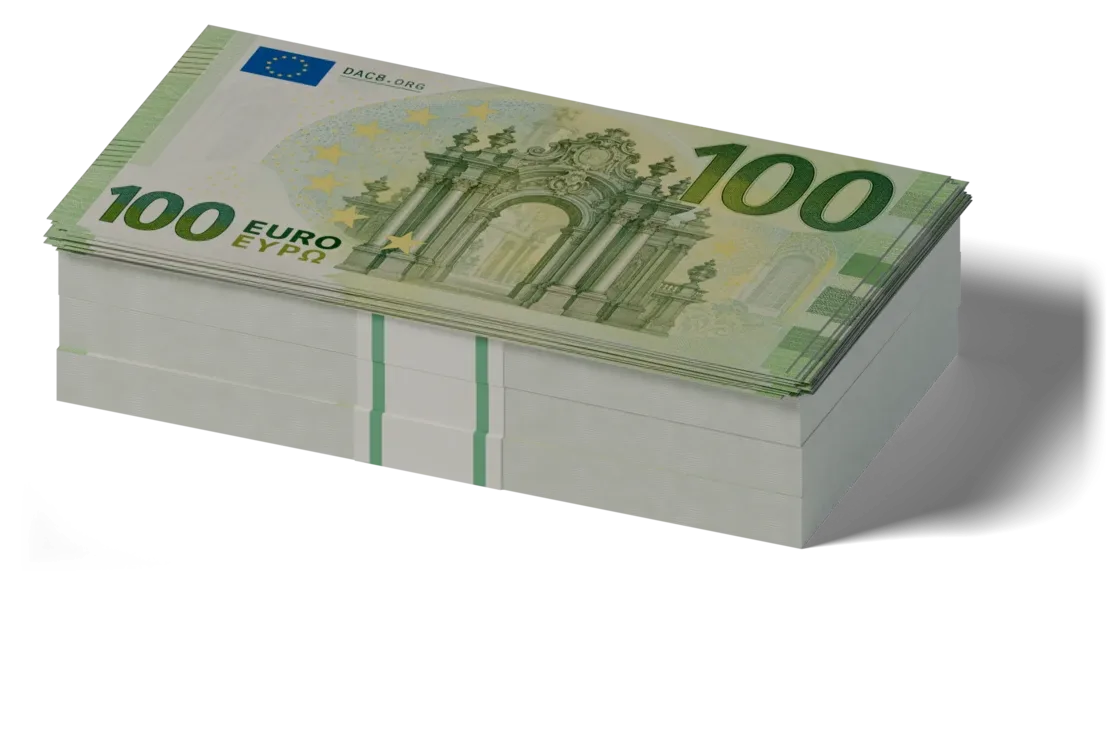
The ID limit falls: from €33,900 to €10,000.
From this amount you must show ID for a single transaction without an account. 1991 in today’s money; the new limit from July 2027. [1–4]
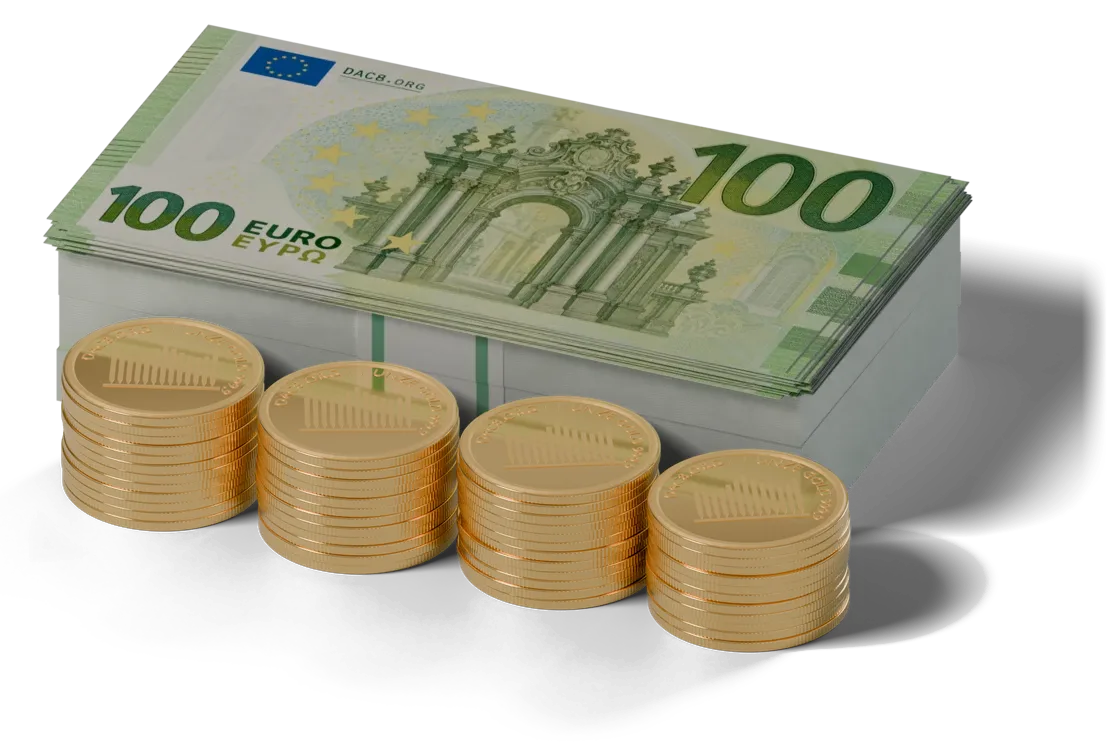
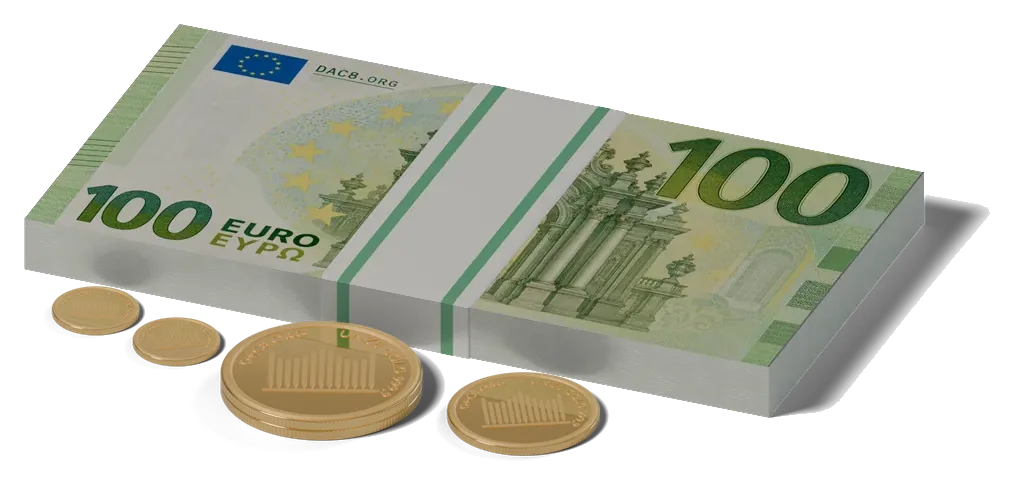
In gold: from 47 to 2.7 ounces.
Measured in gold, the limit falls far more than in today’s money. [5–7]
Crypto: from the first cent.
Every transfer through a provider carries your name. [8]
One way after another.
Since 1977 a single rule has gone, for a broader one. [9]
1991: 6 pages.
The EU’s first anti-money-laundering directive. [1]
13,989 suspicion reports.
Austria 2025: about thirty times as many as in 2005, partly counted differently. [15, 16]
9,665 go nowhere. Stored.
Not passed on, for lack of any indication of a crime or of further leads. [16]
139 convictions.
For money laundering, in the same year. [16]
Of €100 criminals make, the state confiscates about €2.
They keep the rest. Europol’s estimate for the EU. [17]



















And it goes on. What comes next is already decided.
No single step looks big, and each builds on the one before: an exception becomes the rule, data collected for one purpose soon serve several. That is why hardly anyone notices how far it has come.
What it means for you. Reported without suspicion, refused without a reason.
-
Captured
Reported without suspicion.
171 million accounts, 2024 11 million, 2017over 15 times as many as in 2017
Accounts on which tax authorities worldwide exchange data. What triggers a report is an account abroad, not a suspicion. [24, 25]
DAC8 goes further: every customer of a crypto-asset provider is reported, including those who live in the same country, and all exchanged tax data may now also be used against money laundering. [26]
-
Risk
Collected data get lost, at authorities too.
18 at providers, tax tools or service providers
about 46 million people affected in 38 documented cases [27]
In 2019 Bulgaria’s tax authority lost data on more than six million people, including account data from the very exchange DAC8 reports will travel through. [28]
-
No reason given
Refused or closed, without being told why.
- about 1,800
- basic accounts refused on anti-money-laundering grounds
- about 1,300
- closures whose reason the bank was not allowed to give
- no figure
- in Austria: the financial market authority has no figures on this
Germany, mid-2016 to mid-2018, basic accounts only: the account everyone has a right to. How many basic accounts banks closed in all, the Federal Government does not know. [29, 30]
Where the bank may not reveal a suspicion report, it may keep the reason to itself; for accounts other than basic ones, Austrian banks need give no reason anyway. From 2027, the data of people refused are kept for five years. [4, 31, 32]
The bill. The effort grows. What does it achieve?
The data pile up
More reports. More success?
Banks and other businesses report suspected money laundering to the authorities. The number of reports has grown sharply.
×36 suspicion reports 7,349 → 265,708
×5.2 convictions for money laundering 608 → 3,157
8.3 convictions per 100 reports in 2008, 1.2 in 2024.
Grey: reports, red: convictions, each as a multiple of the year chosen. Convictions cannot be traced to particular reports. Reports counted differently from 2017. Convictions only where laundering was the most serious offence; since 2021 any crime can be the source of laundered money. 2025 convictions are not yet published. [35–38]
×9.8 suspicion reports 1,427 → 13,989
×12 convictions for money laundering 12 → 139
0.8 convictions per 100 reports in 2009, 1.0 in 2025.
Grey: reports, red: convictions, each as a multiple of the year chosen. Convictions cannot be traced to particular reports. Reports counted differently from 2012, 2024 and 2025. Final convictions for money laundering as the financial intelligence unit reports them. [15, 33, 34]
Austria · the missing link
Which reports lead to convictions?
The number of reports alone cannot tell us. In 2024, parliament asked about reports concerning sanctions and Russia. The interior ministry said it could not break them down by sender, recipient and outcome of proceedings. [66]
Reply to parliament, 2024
“Despite substantial investments in resources and legislative frameworks, the confiscation of criminal proceeds has stagnated at around an estimated 2 % of illicit proceeds.”
-
Cost
Over 1.2 billion euros a year.
- From 2016 Accounts abroad +€550m around 12 euros per account
- From 2023 Selling or renting online +€678m
- From 2026 Crypto through providers +€23m plus €259m to set up
The running cost of three duties to report to the tax office, every year, as the Commission estimates it. [39–41]
What the rules cost business is often not even estimated: for 6 of 11 Austrian laws on money laundering and tax reporting since 2015 there is no figure. Germany first put the one-off cost of DAC8 at €9.3m, then at €50m. [42–54]
-
Benefit
0.3% of direct taxes, mostly estimated.
What all exchanged tax data bring a year, as the Commission estimates it: €6.8 billion. [39]
Measured from data are €1.2 billion, about what three of the reporting duties cost every year. The rest comes from a model.
Promised, measured. What they announce, and what their own institutions know.
-
DAC8
Promised
€2.4bn
“Based on estimations, additional tax revenues could reach EUR 2.4 billion.”
European Commission in its DAC8 proposal, 2022 [55]
Measured
no information
“There is no information available about how much realised capital gains have actually been taxed.” The 2.4 billion is the tax on all 2020 gains at the top rate of 35 percent.
Its own impact assessment, 2022 [41]
-
DAC8 in Austria
Promised
€35m a year
From 2027 the reporting duty would bring in 35 million euros more a year, and 5 million in 2026.
Austria’s Federal Government in the impact assessment of the crypto reporting duty, 2025 [51]
Measured
no workings
The figure rests on the Commission’s estimate of the tax on all crypto gains of 2020; further details of the finance ministry’s calculations and assumptions are not in the impact assessment.
The Parliament’s budget office, 2025 [56]
The extra revenue expected thus largely equals all the capital gains tax collected on crypto in 2024.
The same budget office, 2025 [56]
-
DAC8 in Germany
Promised
better prevented
This way, he said, tax avoidance and evasion with crypto can be better prevented.
Jens Behrens (SPD) in the Bundestag’s final debate, 2025 [57]
-
DAC7, reporting by online platforms
Promised
good news
“This is good news for the public purse and good news for honest entrepreneurs.”
Paolo Gentiloni, EU tax commissioner, 2020 [59]
Measured
disproportionate
It generates “large volumes of information which has limited tax relevance”, at “disproportionate compliance costs” of about 678 million euros a year.
The Commission six years later, 2026 [40]
-
Account exchange, Germany
Promised
billions
With the exchange, he said, Germany was tackling the billions in tax revenue lost to tax flight.
Wolfgang Schäuble, finance minister, in a government statement, 2014 [60]
Measured
not significant
It expects no significant extra revenue, and the exchange is not even meant to raise any.
Germany’s Federal Government five years later, 2019 [61]
6 more pairs
-
Anti-fraud package with crypto data exchange, Austria
Promised
€270m
We expect additional revenue of 270 million euros this year.
Markus Marterbauer, finance minister, at question time in the Nationalrat, on a package that includes the data exchange on crypto, 2026 [62]
Measured
hard to measure
It is not at all easy to measure this, he said; and on the tax gap: nor do we plan a study of our own.
The same minister in the same answer, 2026 [62]
-
Bank package, Austria
Promised
€700m
The extra revenue is assumed at 700 million euros in 2016.
Austria’s government on the account register, account exchange and looser banking secrecy, 2015 [42]
Measured
cannot be evaluated
Most of the extra revenue from the bank package cannot be evaluated separately.
Finance minister Hans Jörg Schelling, asked what the bank package brought in 2016, 2017 [63]
A direct determination of the actual extra revenue is not possible.
The government’s own evaluation, which still rates the goals fully achieved, 2020 [64]
-
Financial intelligence unit, Austria
Promised
it works
Raising awareness of money laundering is working, it said; the hidden part is shrinking ever further.
Interior ministry under Gerhard Karner, press release, 2023 [65]
Measured
−5% convictions
81 final convictions for money laundering, five percent fewer than the year before.
The same release, further down, 2023 [65]
Asked about reports concerning sanctions and Russia, the ministry said a breakdown of particular subject areas by sender, recipient and outcome of proceedings was technically impossible.
The same minister, asked what came of the reports, 2024 [66]
-
Financial intelligence unit, Germany
Promised
largest in the world
Germany’s financial intelligence unit, he said, is the largest in the world.
Christian Lindner, finance minister, in the Bundestag, 2023 [67]
Measured
289,823 open
289,823 reports were not finalised or of unclear status.
The unit to the Federal Government, a month earlier, 2023 [68]
-
Names on every crypto transfer
Promised
very limited
“The verification burden on CASPs is very limited.”
Assita Kanko, rapporteur in the European Parliament, on checks of transfers to people’s own wallets, 2023 [69]
Measured
no cost estimate
“No precise estimated costs were provided”, and the benefits are “not easy to assess either”. The checks on transfers to people’s own wallets were added later and never assessed.
The Commission in its proposal for this law, 2021 [70]
-
Money laundering
Promised
no place
“There is no place for dirty money in Europe’s financial system.”
Valdis Dombrovskis, Executive Vice-President of the Commission, 2020 [71]
Measured
no method
“Eurostat does not have a methodology to collect and estimate quantitative volumes of money laundering.”
European Court of Auditors, 2021 [72]
Intrusions must be justified. That is why we push back.
Almost every new rule captures everyone who uses a bank or a provider and creates data that can get lost or soon be used for more. What you do with your money is nobody else’s business; whoever wants to know must justify it. And even what holds up in court can be wrong: investigations should start from a concrete suspicion.
Limits so far came from courts.
- 2014
The EU Court of Justice strikes down the retention of phone and internet data, on a referral that also came from Austria; Austria’s Constitutional Court overturns it. [73, 74]
- 2022
The court strikes down public access to the register of who ultimately owns companies, an anti-money-laundering rule: the interference with private life goes beyond what is necessary. [75]
Whether DAC8 stays within such limits, only courts can settle. That is why we are preparing proceedings.
Get involved Every rule and figure, to check.
Each rule with its date, content and primary sources, then the full series behind the film.
How the rules pile up
Four of these rules applied in 2000, six in 2010, thirteen in 2020 and seventeen today.
One row per rule, from the year it applies; for money laundering, in Austria. Open a row for details and sources.
Tax: what authorities receive automatically
About individuals
-
Interest, 2005–2015
For the first time, private entities report automatically: banks acting as paying agents report interest paid to people resident in another EU country.
Austria, Belgium and Luxembourg may instead levy an anonymous withholding tax without reporting names. Once account data is exchanged under DAC2, the directive is repealed from 2016.
- Date
- 3 June 2003, applied from 1 July 2005
- Who reports
- Paying agents, mostly banks
- In Austria
- EU-Quellensteuergesetz 2004: withholding tax of up to 35% instead of reporting, until the end of 2016
-
Salaries, pensions, property, since 2015 DAC1
What is new is mandatory automatic exchange: what authorities already know about salaries, director’s fees, life insurance, pensions and immovable property goes to the country of residence every year.
Directive 2011/16/EU replaces the 1977 rules and remains the framework that every later rule amends.
- Date
- 15 February 2011, automatic exchange from 2015
- Who reports
- Authorities, from their own data
- In Austria
- EU-Amtshilfegesetz, in force since 1 January 2013
Before, 1977
The first mutual assistance directive
Member States’ tax authorities help each other with direct taxes, mainly on request about a specific case, and also spontaneously.
Data flows automatically only where authorities agree to it. VAT (1979) and excise duties (1992) are added later.
- Date
- 19 December 1977
- Who reports
- Authorities only, no companies
- In Austria
- Applies since EU accession on 1 January 1995 (EG-Amtshilfegesetz)
-
Bank accounts, since 2016 DAC2
Banks and other financial institutions report, every year, the name, tax number, account number and balance, as well as interest, dividends and sale proceeds, of customers who are tax resident in another country.
To do so, they determine their account holders’ tax residence under due-diligence rules; certain accounts are exempt. With this, the EU adopts the OECD standard.
- Date
- 9 December 2014, applied from 2016, in Austria from 2017
- Who reports
- Banks, custodians, insurers, funds
- In Austria
- Common Reporting Standard Act (GMSG), in the same 2015 package as the central account register and the easing of bank secrecy. First general exchange by 30 September 2018
Context, 2010
FATCA: the US demands account data worldwide
A US law requires foreign financial institutions to report accounts of US taxpayers to the US tax authority. The EU directive on account exchange (DAC2) expressly names FATCA as a driver.
- Date
- 18 March 2010
Context, 2014
The OECD Common Reporting Standard
The OECD adopts a global standard for the automatic exchange of financial account information, endorsed by the G20.
On 29 October 2014, around fifty jurisdictions sign the exchange agreement in Berlin.
- Date
- 15 July 2014
-
Access to ID and customer records, since 2018 DAC5
Not a new report but new access: tax authorities may use data that banks and others collect to fight money laundering, such as customer identification and beneficial owners.
Above all, this lets them check whether DAC2 account reports are correct. The proposal came shortly after the Panama Papers and refers to “recent media leaks”.
- Date
- 6 December 2016, applied from 2018
- Who reports
- No new reporting duty
- In Austria
- Implemented in the package around the Beneficial Owners Register Act (WiEReG, 2017)
-
Platform income, since 2023 DAC7
Platforms report who rents out property, offers services, sells goods or rents out vehicles through them, including earnings.
Sellers with fewer than 30 sales transactions and total consideration of no more than 2,000 euros in the reporting period are exempt.
- Date
- 22 March 2021, applied from 2023
- Who reports
- Digital platform operators
- In Austria
- Digital Platforms Reporting Act (DPMG), from 2023
-
Crypto-assets, since 2026 DAC8
Crypto-asset service providers report identity and annual values per crypto-asset, including for domestic customers. DAC8 also changes rules that apply to all DAC data.
Since then, Member States may also use every item exchanged to fight money laundering and terrorist financing and, without the sending country’s consent, for EU sanctions. DAC8 further brings e-money into account reporting.
- Date
- 17 October 2023, applies since 1 January 2026
- Who reports
- Crypto exchanges and brokers
- In Austria
- Crypto-Asset Reporting Obligations Act, since 1 January 2026
Context, 2022
The OECD crypto-asset standard
The OECD approves the Crypto-Asset Reporting Framework.
In 2023, it publishes the text of the exchange agreement and an amended account standard. By September 2026, 77 jurisdictions had committed, including every EU country, Switzerland from 2028 and the US from 2029.
- Date
- 26 August 2022
About companies and advisers
-
Country-by-country reports, since 2016 DAC4
Multinational groups with consolidated revenue of at least 750 million euros in the preceding year report their revenue, profits and taxes country by country.
It is based on an OECD project against profit shifting.
- Date
- 25 May 2016, from financial year 2016
- Who reports
- Large groups
- In Austria
- Transfer Pricing Documentation Act (VPDG), 2016
-
Tax rulings, since 2017 DAC3
Authorities exchange information on advance cross-border tax rulings and pricing agreements.
This includes certain rulings from the five years before 2017; validity and turnover limits apply to older rulings. The proposal follows the debate about tax deals with multinationals. The directive itself does not mention the LuxLeaks revelations.
- Date
- 8 December 2015, applied from 2017
- Who reports
- Authorities
- In Austria
- EU-Amtshilfegesetz, 2016 amendment
-
Tax arrangements, since 2020 DAC6
Advisers, banks and other intermediaries report cross-border arrangements with certain hallmarks within 30 days; otherwise the taxpayer reports.
The proposal names the Panama Papers. In 2022, the CJEU invalidated privileged lawyers’ duty to notify other intermediaries who were not their clients. In 2024, it rejected the other validity challenges it examined.
- Date
- 25 May 2018, applied from 1 July 2020
- Who reports
- Advisers and intermediaries
- In Austria
- EU Reporting Obligations Act (EU-MPfG), from 1 July 2020
-
Minimum tax, since 2026 DAC9
Large groups generally file the return for the 15% minimum tax in each country.
Qualifying groups can file centrally instead, with authorities exchanging the relevant information. Individuals are not affected.
- Date
- 14 April 2025, first 2024 returns due by 30 June 2026
- Who reports
- Large groups
- In Austria
- Tax Amendment Act 2025, since 1 January 2026
Proposed
-
Recast, register access, planned from 2028 “DAC10”
The Commission wants to merge all amendments so far into one new directive and simplify them.
To simplify, it proposes 90 instead of 30 days for tax arrangements, changed platform thresholds and an EU tool to verify tax numbers. At the same time, tax authorities would gain access to anti-money laundering registers, including for real estate, and to pension registers. The crypto fields stay the same in substance. In August 2026, the European Data Protection Supervisor recommended tighter limits on this access and on retention.
- Date
- Proposed on 24 June 2026
- Who reports
- Not yet law
- Procedure
- Needs the agreement of every EU country in the Council; Parliament is only consulted. Planned to apply in 2028 and 2030
Money laundering: what banks and providers must check and report
At the bank
-
ID for an account, since 1994
Under the Banking Act, banks record their customers’ identity: for every lasting business relationship, for single transactions from 200,000 schillings and on suspicion of money laundering.
Savings books and securities accounts are at first expressly exempt. The bank keeps the records for at least five years.
- Date
- 1 January 1994
- Who must do it
- Banks and financial institutions
- In Austria
- Banking Act, Federal Law Gazette No. 532/1993, § 40
Context, 1990
The FATF and its 40 recommendations
In 1989 the G7 founded the FATF, a task force against money laundering. Its 40 recommendations ask banks to identify their customers, keep records and watch for unusual transactions.
The recommendations are not law. States put them into law, and the FATF checks whether they do. In 1990 they ran to just over 2,000 words; today, with their notes and glossary, to just over 45,000.
- Date
- Founded in 1989, recommendations in 1990
Before, 1991
The EU’s first anti-money-laundering directive
The EU adopts the recommendations: banks must identify customers when they open an account and for single transactions from 15,000 ECU, and report suspicion.
Its provisions ran to about 2,000 words. The three acts the EU adopted in 2024 run to about 106,000 together, more than fifty times as many.
-
Suspicion reports, since 1994
If a transaction looks like money laundering, the bank reports it to the authority and holds it. It may not warn the customer.
In 2025 the financial intelligence unit received 13,989 reports, 2,671 of them from crypto-asset providers. 9,665, almost seven in ten, were not passed on for now, for lack of an initial suspicion of a crime or further leads, and stay on file for later analysis.
- Date
- 1 January 1994
- Who must do it
- Banks, today also crypto-asset providers, notaries, lawyers and others
- In Austria
- Banking Act, Federal Law Gazette No. 532/1993, § 41; today FM-GwG § 16
-
ID for securities, since 1996
Anyone opening a securities account must show ID. New securities go into old anonymous accounts only after ID.
Sales and payouts from old accounts stayed anonymous until mid-2002.
- Date
- 1 August 1996
- Who must do it
- Banks
- In Austria
- Federal Law Gazette No. 446/1996
-
ID for savings books, since 2000
From November 2000, new savings books require ID. From July 2002, old anonymous books are frozen until someone shows ID.
A password is still possible but only shields against third parties: the bank knows the customer. Since 2008 the law expressly bans anonymous accounts and savings deposits.
- Date
- 1 November 2000 and 1 July 2002
- Who must do it
- Banks
- In Austria
- Federal Law Gazette I No. 33/2000; today FM-GwG § 12
Context, 2000
The FATF threatens to suspend Austria
The FATF announces it will suspend Austria from 15 June 2000 unless the government commits to abolishing anonymous savings books by mid-2002. The government commits, and parliament passes the law in June.
At the same time, the European Commission was taking Austria to the EU Court of Justice over the anonymous savings books.
- Date
- 3 February 2000
-
Continuous monitoring, since 2008
The bank must monitor the business relationship continuously, check transactions and, where needed, ask where the money comes from. It must know who ultimately owns a company or trust.
Add a risk analysis: depending on product, customer and country, the bank checks more or less closely.
- Date
- 1 January 2008
- Who must do it
- Banks and financial institutions
- In Austria
- Banking Act § 40(2a), §§ 40a, 40b, Federal Law Gazette I No. 108/2007
-
Account register, since 2016
A central register records who holds accounts and securities accounts at which bank in Austria, without balances. At first, prosecutors, criminal courts and tax authorities could look it up.
In 2021 the financial intelligence unit, state security, the financial market authority, the Federal Criminal Police Office and sanctions authorities were added, along with safe-deposit boxes. Since July 2026 the anti-fraud office looks it up too, for example against benefit fraud. The tax authority still gets balances and transactions from the bank only with the Federal Fiscal Court’s approval.
- Date
- Since 10 August 2016
- Who must do it
- Banks
- In Austria
- Account Register and Account Inspection Act, Federal Law Gazette I No. 116/2015
Context, 1979
Banking secrecy
In 1979 the Banking Act enshrines banking secrecy. Since 1994 parliament can change it only by a two-thirds majority.
In 2015 a two-thirds majority loosened it for tax purposes, in the same act that created the account register.
-
Connected EU account registers, applies from 2029
Member States’ account registers become searchable through a common interface. They will then also cover accounts at crypto-asset providers, without balances.
- Date
- By 10 July 2029
- Who must do it
- Banks and crypto-asset providers
- In Austria
- Implementation pending
At the crypto-asset provider
-
ID at the provider, since 2020
Crypto exchanges and providers that hold crypto-assets for customers had to register with the financial market authority and have identified their customers like a bank ever since.
Austria also covers exchange between crypto-assets, transfers and the issue of new crypto-assets. Since 2026 every provider needs a licence under the EU regulation on markets in crypto-assets, MiCA for short.
- Date
- Since 10 January 2020
- Who must do it
- Crypto-asset providers
- In Austria
- FM-GwG § 32a, Federal Law Gazette I No. 62/2019
Context, 2015
The FATF and bitcoin
In 2015 the FATF recommends regulating the exchanges between crypto-assets and euros or dollars, expressly not the people who use bitcoin to pay.
In 2019 it asks for a licence or registration for every crypto-asset provider, an ID check from 1,000 euros, and that providers obtain and pass on sender and recipient details for transfers.
- Date
- June 2015 and June 2019
-
Names with every transfer, since 2024
Every transfer through a provider carries the name and wallet address, much like an account number, of sender and recipient, with no minimum amount, plus the sender’s home address and ID number or date and place of birth. The providers store them.
For transfers to your own wallet, a program or device with which you hold the keys yourself, the provider records these details; from 1,000 euros it must check that the wallet belongs to the customer. Transfers from person to person, without a provider, are not covered.
- Date
- Since 30 December 2024
- Who must do it
- Crypto-asset providers
- In Austria
- Applies directly as an EU regulation
-
No anonymous accounts, applies from 2027
Banks and crypto-asset providers may not keep anonymous accounts, including through crypto-assets that obscure transfers. Your own wallet and its software are not affected.
For single transactions, crypto-asset providers run full checks from 1,000 euros and identify the customer below that too.
- Date
- From 10 July 2027
- Who must do it
- Banks, financial institutions and crypto-asset providers
- In Austria
- Applies directly as an EU regulation
With cash
-
Cash up to €10,000, applies from 2027
Traders and service providers may accept or pay at most 10,000 euros in cash. Between private persons, cash stays free. From 3,000 euros in cash, banks and other obliged firms will also have to check ID for single transactions.
Austria has no general cap so far. A right to cash in the constitution failed in parliament in 2019; in early 2026 the finance minister knew of no such plan.
- Date
- From 10 July 2027
- Who must do it
- Traders, service providers, banks
- In Austria
- Applies directly as an EU regulation
Before, 2019
No new 500-euro notes
Austria’s central bank, too, stops issuing 500-euro notes. The European Central Bank cited the concern that the note could facilitate illicit activity; it gave no figures.
The note remains legal tender and keeps its value.
- Date
- Since 26 April 2019
- Who must do it
- Central banks
- In Austria
- With the Bundesbank, the last central bank to issue it
For all tax data Since DAC8, all of this data may also be used to fight money laundering and terrorist financing.
Except for the Savings Directive, all of these rules are in the same 2011 directive or amend it. The exchange channels, official secrecy and the rules on what the data may be used for apply to all categories alike.
Originally, exchanged information could be used for taxes, tax recovery, social security contributions and tax penalty proceedings; any other use needed the sending country’s consent. DAC8 added the fight against money laundering and terrorist financing, and for the purposes of EU sanctions acts under Article 215 TFEU, the sending country’s consent is no longer required. Purpose limits, official secrecy and data protection still apply. This covers all DAC data, including bank-account, salary, pension and platform data.
For every AML duty What providers record for these duties, they currently keep for up to ten years after the customer relationship ends.
ID, wallet addresses and individual transactions stay with the provider, currently for up to ten years after the customer relationship ends. Authorities receive them with a suspicion report or on request, for example in criminal proceedings.
Austria 2025: 13,989 suspicion reports, 139 convictions
Austria, 2005 to 2025, both on one scale. Convictions for money laundering are not linked to particular reports; the way reports are counted changed several times.
| Year | reports | convictions for money laundering |
|---|---|---|
| 2005 | 467 | – |
| 2006 | 692 | – |
| 2007 | 1,085 | – |
| 2008 | 1,231 | – |
| 2009 | 1,427 | 12 |
| 2010 | 2,289 | 24 |
| 2011 | 2,115 | 13 |
| 2012 | 1,665 | 23 |
| 2013 | 1,490 | 15 |
| 2014 | 1,673 | 46 |
| 2015 | 1,793 | 58 |
| 2016 | 2,150 | 36 |
| 2017 | 3,058 | 53 |
| 2018 | 2,744 | 66 |
| 2019 | 3,073 | 63 |
| 2020 | 4,356 | 89 |
| 2021 | 4,994 | 85 |
| 2022 | 6,053 | 81 |
| 2023 | 7,603 | 120 |
| 2024 | 11,111 | 152 |
| 2025 | 13,989 | 139 |
- Counting changed in 2009, 2012, 2024, 2025.
- Answer 4756/AB (23rd legislative period)
- Answer 8594/AB (25th legislative period)
- Money laundering reports 2010 to 2025
2024: 171 million accounts exchanged worldwide
Accounts on which tax authorities exchange data, in millions, by year of exchange; the OECD has not yet published newer figures. Reported by the tax administrations; accounts with several holders may count more than once.
| Year | million accounts |
|---|---|
| 2017 | 11 |
| 2018 | 47 |
| 2019 | 84 |
| 2020 | 75 |
| 2021 | 111 |
| 2022 | 123 |
| 2023 | 134 |
| 2024 | 171 |
How long the rules have become
The FATF is the international task force against money laundering; states write its recommendations into law. Words of each text without the reasons placed before it; reading time at 200 words a minute.
-
FATF recommendations against money laundering 21 times as long
1990 2,164 words, 11 minutes
2026 45,232 words, 3.8 hours
-
EU anti-money-laundering rules 52 times as long
1991 2,028 words, 10 minutes
2024 106,142 words, 8.9 hours
2024 including the regulation setting up the new EU anti-money-laundering authority; without it 34 times as long.
-
EU tax cooperation 32 times as long
1977 1,786 words, 9 minutes
2026 57,087 words, 4.8 hours
In figures
- 0.3%
of direct taxes in the EU is what all exchanged tax data bring, according to the Commission, mostly estimated without data
SWD(2025) 365, p. 36 - 4%
of German prosecutors’ replies on suspicion reports concerned a judgment, indictment or penalty order in 2025
FIU, annual report 2025 - 9%
of the countries the FATF evaluated prosecute money laundering effectively, as its assessors rate it
FATF, Report on the State of Effectiveness, 2022 - about 1%
of crypto volume went to criminals or sanctioned entities in 2025, as two analysis firms estimate it, a lower bound
Chainalysis, Crypto Crime Report 2026 - 2027
is when the European Commission first has to report how well the crypto transfer rules work
Regulation (EU) 2023/1113, Article 37
What the Commission and auditors say themselves
-
Their effect on money laundering “can only be indirectly perceived via proxy indicators”, which “can be misleading”.
European Commission, 2021, on the anti-money-laundering rules, SWD(2021) 190, p. 78
-
“The vast majority” of the account and income data exchanged “is used to little effect in raising additional tax assessments”.
European Court of Auditors, 2021, on the tax data, European Court of Auditors, special report 03/2021, paras 68 and 115
-
The ministry had not considered a cost–benefit analysis; tax offices said the success of the information exchange could not in principle be measured.
Austrian Court of Audit, 2019, on the finance ministry, Court of Audit, report 2019/33, para 19, in German
Sources.
- [1] Directive 91/308/EEC eur-lex.europa.eu
- [2] Statistik Austria, CPI 86 landesentwicklung.steiermark.at
- [3] Regulation (EC) 1103/97, Art. 2 eur-lex.europa.eu
- [4] Regulation (EU) 2024/1624 eur-lex.europa.eu
- [5] Bundesbank, Frankfurt gold price, 10 June 1991 bundesbank.de
- [6] Eurostat, ECU rate of the Deutsche Mark, 10 June 1991 doi.org
- [7] ECB, quarter-end gold price, statement as at 2 October 2026 ecb.europa.eu
- [8] Regulation (EU) 2023/1113 eur-lex.europa.eu
- [9] Every rule with its date, content and primary sources, in the section to check
- [10] Federal Law Gazette I No. 116/2015 ris.bka.gv.at
- [11] Federal Law Gazette I No. 25/2021 ris.bka.gv.at
- [12] Federal Law Gazette I No. 46/2026 ris.bka.gv.at
- [13] Directive (EU) 2024/1640 eur-lex.europa.eu
- [14] Regulation (EU) 2024/1620 eur-lex.europa.eu
- [15] Interior ministry, answer 4756/AB (23rd legislative period) parlament.gv.at
- [16] Financial intelligence unit, money laundering report 2025 bundeskriminalamt.at
- [17] Europol, EU-SOCTA 2025, pp. 13 and 25 europol.europa.eu
- [18] Commission proposal COM(2026) 308 eur-lex.europa.eu
- [19] EDPS Opinion 20/2026 data.consilium.europa.eu
- [20] FATF, Recommendation 16, June 2025 fatf-gafi.org
- [21] Regulation (EU) 2021/1232 eur-lex.europa.eu
- [22] Commission proposal COM(2022) 209 eur-lex.europa.eu
- [23] European Parliament, procedure 2022/0155(COD) oeil.europarl.europa.eu
- [24] OECD Global Forum, annual report 2020 oecd.org
- [25] OECD Global Forum, annual report 2025, p. 13 oecd.org
- [26] Directive (EU) 2023/2226 eur-lex.europa.eu
- [27] Every documented data leak with its primary sources
- [28] OECD Global Forum, statement on the data breach at Bulgaria’s tax authority, 2019 web.archive.org
- [29] Federal Government, Bundestag paper 19/11479, pp. 3–4, in German dserver.bundestag.de
- [30] Consumer protection ministry, answer 7425/AB (27th legislative period), pp. 3–4, in German parlament.gv.at
- [31] Finance ministry, answer 2591/AB (28th legislative period), p. 5, in German parlament.gv.at
- [32] Directive 2014/92/EU, Article 16(7) eur-lex.europa.eu
- [33] Answer 8594/AB (25th legislative period) parlament.gv.at
- [34] Money laundering reports 2010 to 2025 bundeskriminalamt.at
- [35] BKA, FIU annual report 2016, p. 9 bka.de
- [36] FIU, annual reports 2017 to 2025, in German zoll.de
- [37] Federal Statistical Office, prosecution statistics, series 10.3, table 2.1, 2008 to 2021, in German destatis.de
- [38] Federal Statistical Office, prosecution report 2024, table 24311-05, in German destatis.de
- [39] European Commission, SWD(2025) 365, pp. 36–43 eur-lex.europa.eu
- [40] European Commission, SWD(2026) 166, pp. 1–2 data.consilium.europa.eu
- [41] European Commission, SWD(2022) 401, p. 36 eur-lex.europa.eu
- [42] RV 685 (XXV. GP), cover sheet and impact assessment, in German parlament.gv.at
- [43] RV 1335 (XXV. GP), cover sheet and impact assessment, in German parlament.gv.at
- [44] RV 1660 (XXV. GP), cover sheet and impact assessment, in German parlament.gv.at
- [45] Finance Committee, report 644 (26th legislative period), in German parlament.gv.at
- [46] Members’ motion 983/A (XXVI. GP), without impact assessment, in German parlament.gv.at
- [47] Members’ motion 1191/A (XXVII. GP), without impact assessment, in German parlament.gv.at
- [48] RV 1534 (XXVII. GP), cover sheet and impact assessment, in German parlament.gv.at
- [49] RV 2091 (XXVII. GP), cover sheet and impact assessment, in German parlament.gv.at
- [50] Members’ motion 1/A (XXVIII. GP), without impact assessment, in German parlament.gv.at
- [51] RV 306 (XXVIII. GP), cover sheet and impact assessment, in German parlament.gv.at
- [52] RV 622 (XXVIII. GP), cover sheet and impact assessment, in German parlament.gv.at
- [53] Federal Government, Bundestag paper 21/1937, in German dserver.bundestag.de
- [54] Budget Committee, Bundestag paper 21/2623, p. 2, in German dserver.bundestag.de
- [55] European Commission, COM(2022) 707, p. 8 eur-lex.europa.eu
- [56] Parliamentary Budget Office, analysis of the 2025 anti-fraud package, p. 29, in German parlament.gv.at
- [57] Bundestag, plenary record 21/37, p. 4202, in German dserver.bundestag.de
- [58] Federal Government, Bundestag paper 21/1707, p. 2, in German dserver.bundestag.de
- [59] European Commission, IP/20/2253 ec.europa.eu
- [60] Bundestag, plenary record 18/63, pp. 5786–5788, in German dserver.bundestag.de
- [61] Federal Government, Bundestag paper 19/12586, p. 4, in German dserver.bundestag.de
- [62] Nationalrat, 73rd sitting, 26 March 2026, question time, in German parlament.gv.at
- [63] Finance ministry, answer 11924/AB (25th legislative period), p. 4, in German parlament.gv.at
- [64] Federal Government, report on impact assessments 2020, pp. 229–231, archived copy, in German web.archive.org
- [65] Interior ministry, press release of 5 October 2023, in German ots.at
- [66] Interior ministry, answer 16404/AB (27th legislative period), p. 10, in German parlament.gv.at
- [67] Bundestag, plenary record 20/87, p. 10356, in German dserver.bundestag.de
- [68] Federal Government, Bundestag paper 20/6467, p. 12, in German dserver.bundestag.de
- [69] European Parliament, plenary debate of 19 April 2023 europarl.europa.eu
- [70] European Commission, COM(2021) 422 eur-lex.europa.eu
- [71] European Commission, SPEECH/20/830 ec.europa.eu
- [72] European Court of Auditors, special report 13/2021, para 48 eca.europa.eu
- [73] CJEU C-293/12 and C-594/12 eur-lex.europa.eu
- [74] Constitutional Court G 47/2012 ris.bka.gv.at
- [75] CJEU C-37/20 and C-601/20 eur-lex.europa.eu
Research by Bitcoin Austria, as of 30 October 2026. The numbers in brackets lead here; the charts to check carry their own sources.